

A beginner-friendly guide to practising guitar with a metronome: start slow, choose which beats to click, raise the tempo gradually, and use the click for chord changes and strumming.

A practical guide to power chords for beginners: two- and three-note shapes on the low strings, muting unused strings, moving the shape, electric vs acoustic use and common mistakes.

Practical beginner tips on how to switch guitar chords faster: anchor and guide fingers, moving each chord as one shape, practising only the change, timed drills and thinking ahead.

A plain-language guide to beginner strumming patterns: relaxed downstrokes, counting out loud, the constant down-up motion, simple D/U patterns, muted strums and slow practice.

A plain-language beginner guide to using a capo: where to place it, how to check tuning after clamping, moving familiar chord shapes to a new key, and common mistakes to avoid.

One of the most universal experiences for anyone picking up the guitar for the first time is finger pain new guitar practice often brings. Discover effective strategies to manage discomfort and build calluses.

Many new players fall into similar traps that can slow progress or even lead to frustration. Recognizing and rectifying these common beginner guitar mistakes early on can make a significant difference.

Wondering how much first guitar investment is truly necessary for adults embarking on their guitar journey? Finding the sweet spot between affordability and quality is crucial for a positive learning experience.
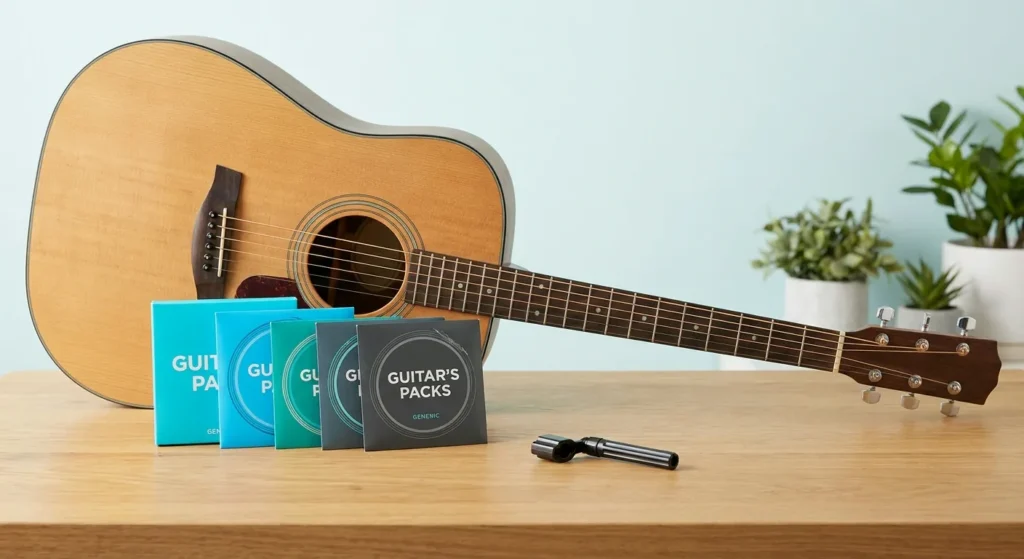
Choosing the best guitar strings beginner players should use is crucial for comfort and faster learning. Discover ideal gauges and materials for your first guitar to make your journey more enjoyable.

Deciding to learn guitar self taught as an adult brings unique considerations. This guide explores whether independent learning or formal lessons are the best path for new guitarists.
Go to Page:
Add a header to begin generating the table of contents